
Cyber crimes in 2016-2017: 1,372 cases. Cost: Rs 423 million.

'Over the next two quarters, markets will be guided by observing the earnings resilience of corporates during the second lockdown, progress of the monsoon and the damage, if any, to rural spending power due to the second wave.'
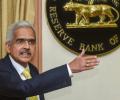
The board deliberated on the governance framework of the RBI and it was decided that the matter needs further examination

India's Right-wing has sought to own our democracy by making itself appear the stuff of majority, and sometimes, a national ethos older than the Constitution on which our democracy is based, argues Shyam G Menon.

IndusInd Bank was the biggest gainer in the Sensex pack, rallying 5.23 per cent, followed by Hero MotoCorp, Coal India, Yes Bank, PowerGrid, ICICI Bank, HCL Tech, L&T, Kotak Bank and Bharti Airtel, rising up to 1.56 per cent.

The finance minister's meeting with chief executives and managing directors of banks ahead of the Union Budget assumes significance in view of the critical role the banking sector plays in boosting consumer demand across sectors.

Asks banks to settle for lower margins, boost efficiency.

For the philanthropy, we wanted also to have big impact, a kind of a new dimension.

Six months into his new role, Vishal Wanchoo, president and chief executive officer, GE, South Asia, speaks to Jyoti Mukul about how its horizontal business lines of additives and digital are playing across its verticals.

S&P Global Ratings on Wednesday lowered India's economic growth forecast to 5.2 per cent for 2020, saying the global economy is entering a recession amid the coronavirus pandemic. The agency had earlier projected a growth rate of 5.7 per cent during the 2020 calendar.

The 6.7% growth in Index of Consumer Sentiments in July 2022 is the highest since September 2021, explains Mahesh Vyas.

As lobbying and counter-lobbying intensify, right now, it looks like a T20 match, discovers Tamal Bandyopadhyay.

Ajit Mishra will answer Your Questions on the stock markets on a weekly basis. Please mail your questions to getahead@rediff.co.in with the subject line 'Stock Market Query' along with your name and Ajit will offer his unbiased views.

The global COVID-19 situation, rollout of vaccines, geopolitical trends, Union Budget and economic recovery would be the major factors driving investor sentiments in 2021 after a tumultuous year which saw both 'the worst of times and the best of times' for the stock market, said analysts. What a year 2020 turned out to be! From witnessing gigantic losses to record-shattering gains, investors went on a roller-coaster ride amid the coronavirus pandemic and massive stimulus measures. Markets closed 2020 with remarkable gains of around 16 per cent, but will the winning ways continue in 2021 as well?

'India resembles not just the more turbulent bits of its own past, but other 'managed' democracies, where all institutional strength and independence have been hollowed out to serve political power,' notes Mihir S Sharma.

Housing Development Finance Corp (HDFC) chairman Deepak Parekh on Tuesday said that while the country's macroeconomic fundamentals remain strong and the recovery is in progress, the unpredictability of coronavirus will remain a key challenge. Owing to the second wave, the Indian economy is likely to mirror a similar trend seen in FY21, where the first half of the financial year is weaker and the second half is significantly stronger, he said. "I remain confident that India's macroeconomic fundamentals are strong. Recovery is underway," Parekh said while addressing the 44th annual general meeting of HDFC Ltd. He said, the country's forex reserves and foreign direct investment inflows have scaled record highs, the capital markets are also buoyant and agriculture growth is expected to remain strong with food grain production estimated at over 305 million tonnes.
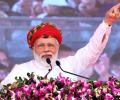
#MainBhiChowkidar was trending world wide on Twitter.

'Any entrepreneur who wants to create companies on blockchain will have to move outside India.' 'A ban will also wipe out the entire asset investing class that has built up in India.'

Finance Minister Nirmala Sitharaman on Thursday said the Indian economy is witnessing a strong recovery after a long and strict lockdown. Addressing a press conference to announce more stimulus measures to boost growth, she said macro-economic indicators are pointing towards recovery. She noted that COVID-19 active cases have declined from over 10 lakh to 4.89 lakh with case fatality rate (CFR) at 1.47 per cent.

The Reserve Bank of India (RBI) has said that any disorderly adjustments in the global financial markets may result in a sharp rise in interest rates. This, in turn, will result in an increase in defaults in home loan portfolios and mark-to-market losses on investments by banks in India.

Anil Rego, CEO of RightHorizons, will answer your financial planning queries.

Investment trend by foreign investors will also be closely watched for stock movement
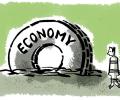
Moody's Investors Service on Friday projected India's growth at zero per cent for the current fiscal and said the negative outlook on sovereign rating reflects increasing risks that GDP growth will remain significantly lower than in the past. The outlook also partly shows weaker policy effectiveness to address economic and institutional issues, it noted in the update to its November 2019 rating forecast.

The decision to permit the third child came after this month's once-in-a-decade census showed that China's population grew at the slowest pace to 1.412 billion amid official projections that the decline may begin as early as next year.

The assessment of PMJDY should be done within the context of the programme.

"Numerous rounds of talks have taken place with the Chinese counterparts to deescalate the situation without compromising on India's stand of 'complete disengagement and immediate restoration of status quo ante'," the defence ministry said.
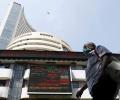
The market capitalisation of BSE-listed companies on Thursday crossed the historic Rs 200 lakh crore mark for the first time, driven by a continuous rally in the broader market. Riding high on the bullish investor sentiment, the market capitalisation of BSE-listed companies reached a record Rs 2,00,47,191.31 crore at close of trade. The 30-share BSE index closed the day with a gain of 358.54 points or 0.71 per cent at its lifetime peak of 50,614.29. This is the fourth consecutive day of gains for the markets.
RBI says haste in easing norms for banks harmful to economy.

Listening -- really listening -- to advisers in the government and outside would help. India has plenty of wise economists who have worked within the bureaucracy during previous crises, points out Rahul Jacob.
The Reserve Bank on Wednesday said that global crude oil prices, which are nearing the $100 a barrel mark, could impact inflation in India. "High and volatile crude oil prices in the international markets pose a major risk to domestic price stability," the RBI said in its report on 'Trend and Progress in Banking'.

This is the highest closing for both the indices since May 15.

On Monday, the biggest gainers in the Sensex pack were Sun Pharma, Bajaj Finance, Vedanta, Yes Bank, Tata Motors, HCL Tech, IndusInd Bank and Kotak Bank, HCL Tech, Infosys and Bajaj Auto.

Rajan has ignored pressure to loosen policy.
Demand for money from infrastructure-related sectors like power, roads, electricity and telecom has witnessed a faster rise.

Progress of monsoon, investment trend by foreign investors and the movement of rupee against the dollar will also influence sentiment

China's birth rate has been in decline since 2017, despite easing of the 'one-child policy' in order to avert an incoming demographic crisis.

'India's sizeable foreign exchange reserves should serve as a buffer.'
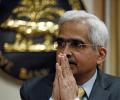
'Three external members of the first MPC are respected researchers with excellent academic background, but there is no harm in considering academicians with diverse backgrounds such as finance and labour along with economists for this body,' recommends Tamal Bandyopadhyay.

Despite the relaxation of the one-child policy in 2016, the number of live births per 1,000 people fell to a record low of 10.48 in 2019, down from 10.94 in 2018.

'If businesses are focused on de-leveraging, they can hardly be investing. This is the price extracted by investment mistakes during UPA rule, and should have been foreseen. 'But Modi-I must share the blame, for muted reform of the financial sector, partisan policy in telecom, the harm done to exports by an over-priced rupee, and so on,' says T N Ninan.
